
./crucible --for-organizations

For organizations

Your participants get a private workspace for the whole job search. Your staff get a workspace beside it. Each person decides what crosses between them.

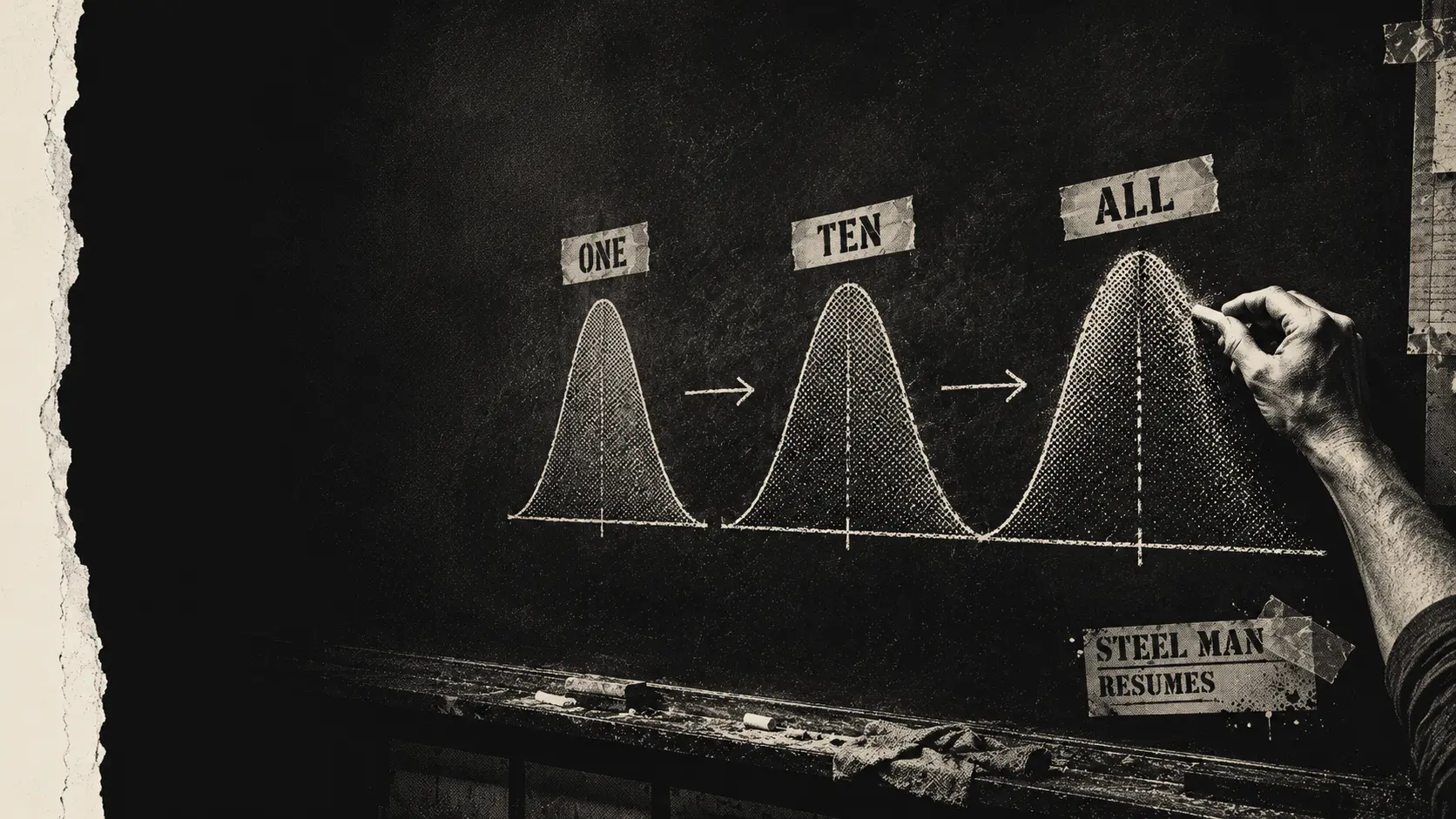
Three bell curves shifted progressively to the right

How to start

Crucible is the organization side of Steel Man.

The participant tools are free and open to everyone today. The organization workspace is available to programs by arrangement.

Ask for a walkthrough and you will see the system itself: a caseload, a participant choosing what to share, and the report a funder would receive.

01 / THE PRINCIPLE

PARTICIPANTS OWN THEIR WORK

Most case management software treats the person as a record the organization keeps. Here the person keeps their own work, and decides what their case manager sees.

SHARING IS THE PARTICIPANT'S DECISION

Participants choose what to share with their case manager, item by item, and can stop at any time. No setting an organization controls can open a participant's resume. Only the participant can.

THEY SEE WHO OPENED WHAT

Participants can see who opened what, and when. Staff ask for access with a reason; the participant answers.

SOME THINGS STAY PRIVATE, ALWAYS

Disclosure plans, interview practice and stored documents stay private. No program can require them. A participant's private notes on a job and the pay they wrote down are never shown to staff, even when applications are shared.

STAFF SUGGEST. PARTICIPANTS DECIDE.

Case managers suggest a job or leave a comment beside a shared document. Participants decide what becomes their own work. Case managers never edit it and never sign in as the participant. They get a map of the participant's screen, and see inside an area only if it was shared.

LEAVING IS CLEAN

Leaving an organization ends all sharing and keeps the person's work. Rejoining does not bring the old sharing back.
Why it is built this way

Trust is the working material.

People coming home have had every file about them written by someone else. A tool that watches them gets the minimum. A tool they control gets the truth, and the truth is what a case manager needs to help.

So the rule runs through the whole system: case managers suggest. Participants decide what becomes their own work.

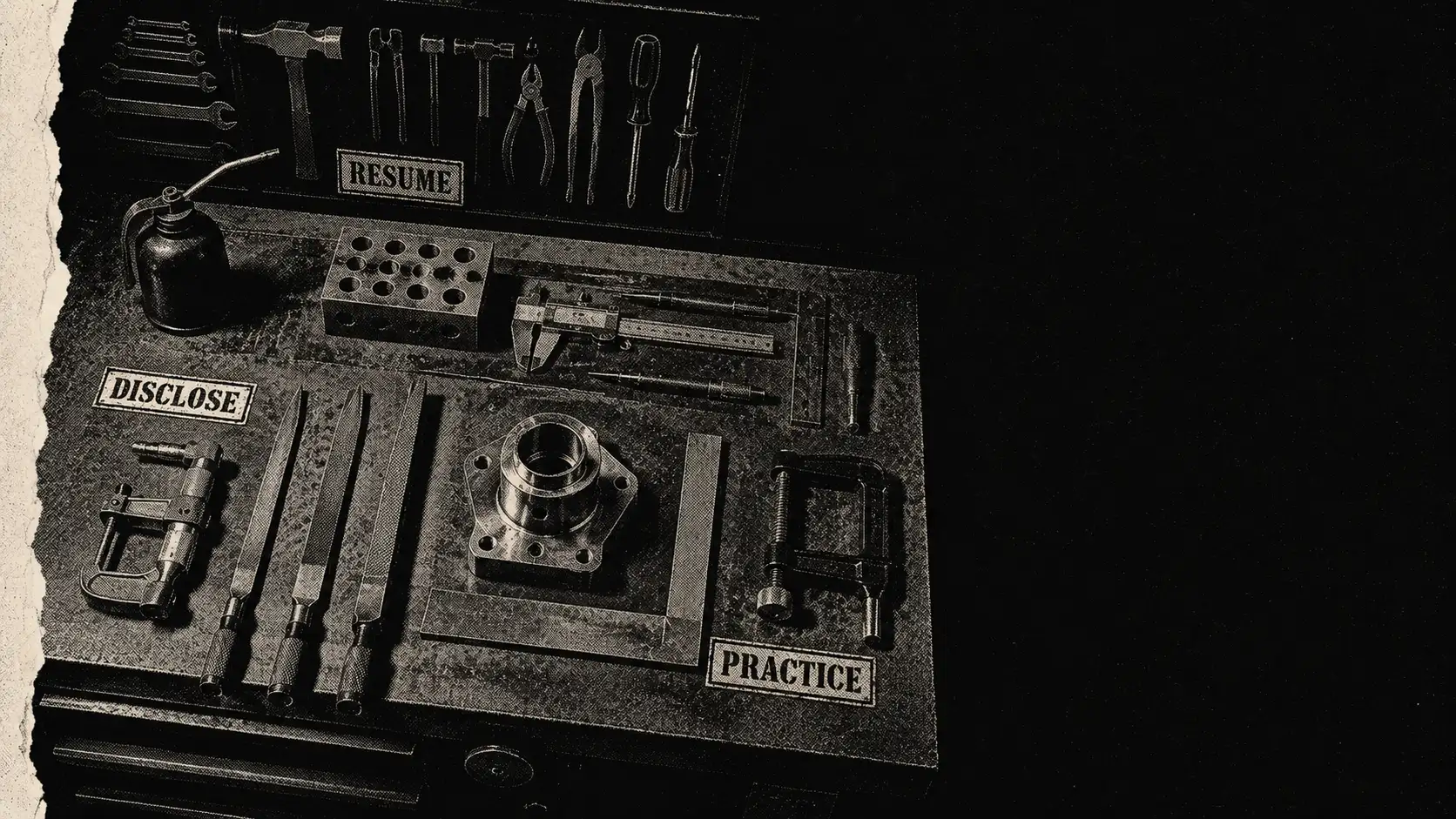
An organized workbench with tools laid out in order

02 / STAFF WORKSPACE

WHAT YOUR STAFF WORK IN

Built for the working day of a case manager and the reporting day of a program director.

TODAY

A work queue sorted by reason, so the day starts with who needs what. One organization-wide setting defines "quiet after N days," and every screen and the assistant read the same number.

CASELOAD

Find, sort and filter by status and case manager. Save the views your team uses. Assign in bulk.

THE PARTICIPANT PAGE

Notes that are versioned and never deleted. Tasks you can share with the participant. Job suggestions. Comments beside the documents they chose to share.

OUTCOMES THAT SAY HOW THEY ARE KNOWN

A placement records how it is known: told to staff, known but unconfirmed, or confirmed and how. Retention check-ins come due at 30, 60, 90 and 180 days.

TEAM

An organization chart with access switches for each person, and staff invitations by email. Changes to who can see what are recorded.

INSIGHTS AND THE FUNDER EXPORT

Aggregate reporting with an export built for funders, in which every figure carries what it was counted over.

Honest numbers

A retention rate you can defend.

A retention rate here is "still there" out of "old enough to ask." Someone placed last week is not a 30-day failure, and someone we could not reach is not counted as either answer.

The assistant follows the same rule. Answers to staff are generated whole and checked against the organization's actual figures before they appear.

03 / PROTECTION

HOW DATA IS PROTECTED

Specific claims, each one backed by a test we can show you.

ENFORCED BY THE DATABASE

Organization boundaries are enforced by the database itself, not only by application code. One organization cannot see another's people, staff, notes, tasks, outcomes or sharing records.

PARTICIPANT WORK BELONGS TO THE PARTICIPANT

A participant's applications, resumes and profile can be read only by that participant. Staff see a shared item through a restricted view that does not contain private notes, pay, or disclosure plans at all.

TESTED ON EVERY CHANGE

An isolation test suite runs as the restricted database account on every pull request, checking that one organization cannot read another's records and that staff cannot reach what a participant has not shared.

OPEN TO INSPECTION

The Forge, The Refinery and Crucible are open source under AGPL-3.0. Your technical staff can read exactly how the system handles data instead of taking our word for it.
04 / PARTICIPANTS

WHAT YOUR PARTICIPANTS GET

Free for every participant, with or without the organization workspace. Many programs start here.

THE FORGE, ALWAYS FREE

Send participants through The Forge before the first meeting. They arrive with a career report, and your staff begins with useful information instead of a blank page.

THE REFINERY, FREE WITH AN ACCOUNT

Resume builder, disclosure planner, interview practice, job board and application tracking. Partner access codes unlock expanded daily AI limits for your program's participants.

THE MINI FORGE, FOR ROOMS AND TABLETS

A shorter Forge sized for a classroom, a tablet or an event. People who complete it inside can pick their plan back up in The Refinery with a code.

CO-BRANDED MATERIALS

Flyers, one-pagers and QR codes carrying your organization's branding, ready to hand out.
05 / EVIDENCE

WHY ORGANIZATIONS TRUST US

The work is grounded, traceable, and built by people who understand the conditions your participants are navigating.

RESEARCH-GROUNDED METHOD

Built on 150+ peer-reviewed citations across neuroscience, desistance theory, narrative psychology and trauma-informed care. Not a resume scanner with a chatbot bolted on.

CONNECTED TO THE FIELD

Troy is a FICGN Narrative Change Fellow, P2P Scholar (Cohort 49), published researcher, and Reentry United 2026 breakout presenter. The work is shaped in national learning communities and tested in public with practitioners.

BUILT BY LIVED EXPERIENCE

A decade of direct service, starting at a halfway house as an alum, then working through sober living homes, treatment centers, jails and prisons. The founder experienced incarceration and homelessness firsthand. Every design decision reflects that reality.

Thanks, out loud

Community makes this possible.

With thanks to Reentry United 2026, our host, and EXPO of Wisconsin, our sponsor.

Support like this helps keep the tools free and moves the work into rooms where it can be challenged, improved, and used.

06 / NETWORK

WHO THIS IS FOR

One system, designed to meet people through many different front doors.
01

Reentry Programs

02

Corrections Education

03

Workforce Development Boards

04

Job Centers

05

Community Colleges

06

Vocational Rehab (DVR)

07

Halfway Houses

08

Transitional Housing

09

Recovery Centers

10

Domestic Violence Programs

11

Anti-Trafficking Organizations

12

Veterans Services

See it with your own questions.

Bring your data and access questions. We will answer them in the running system, not on a slide.

Need outreach or marketing support for your program? That work runs through The Midnight Garden.