

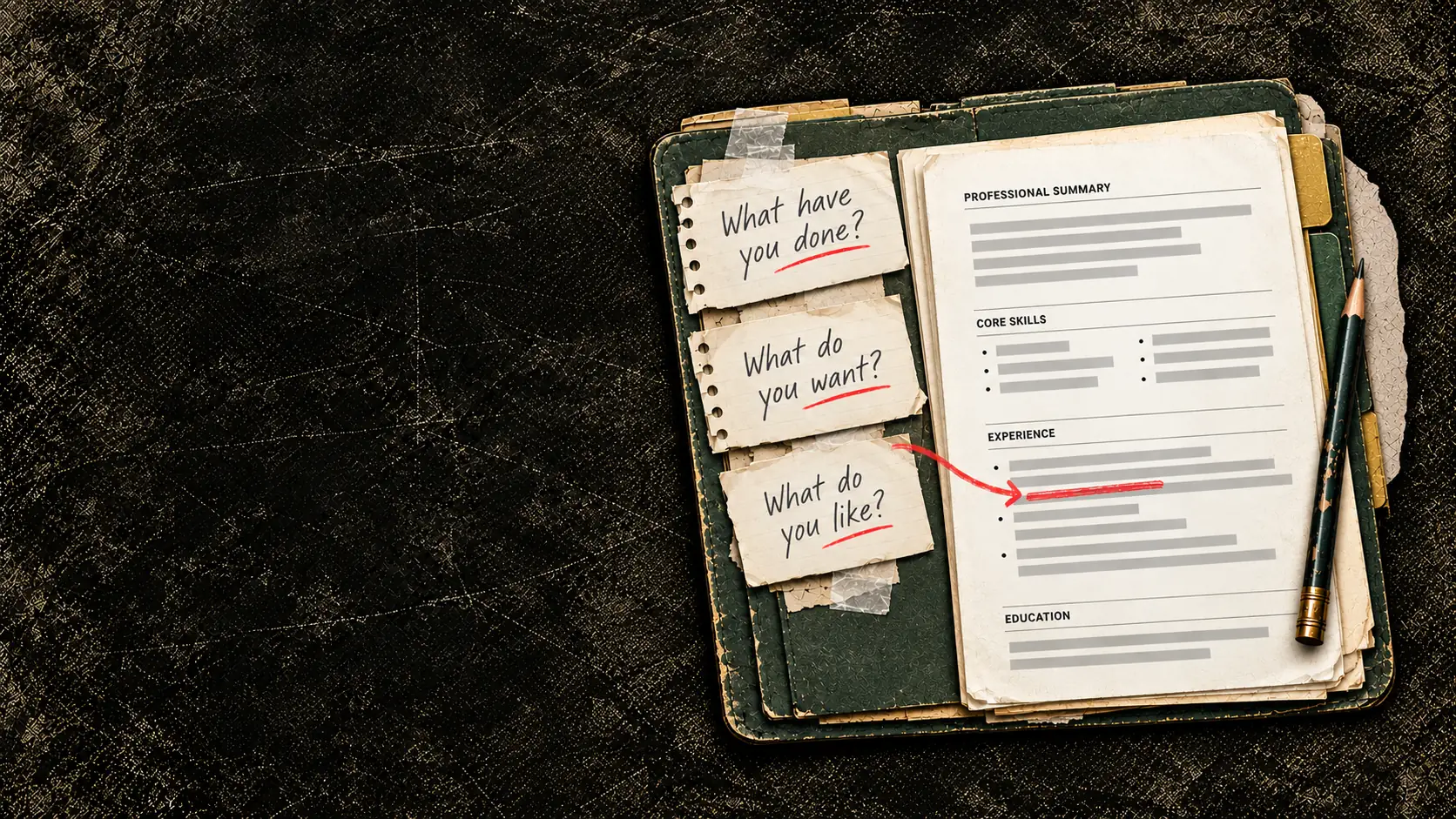
You don't need a diploma to sit at a desk. You need a plan.
You've been doing warehouse work, or landscaping, or whatever showed up first after you got out. It pays. But your back hurts, the shifts are brutal, and you keep wondering if there's a way into something steadier: a desk, a headset, regular hours, air conditioning. Then you look at the job postings for office and customer service work and every one of them seems to want a bachelor's degree for a job that's basically answering phones and typing.
Here's the truth: most entry-level office and customer service jobs don't actually require a degree. What they require is proof you can show up, talk to people without losing your cool, and use a computer well enough to do the work. A lot of postings list "bachelor's preferred" as a filter to thin the stack of applicants, not because the job needs it. I've watched people walk past those listings for years, assuming they were locked out, when they weren't. And yes, plenty of these are realistic jobs for felons. If you have a felony, the record matters more for some desk jobs than others, and this guide shows you which.
The record adds a real wrinkle, especially for jobs that touch money or customer information. I'm not going to pretend that away. But office and customer service hiring works differently than a lot of people expect, and once you understand how, it opens doors that felt closed.
The Entry-Level Office and Customer Service Jobs That Actually Don't Require a Degree
These are real job titles you'll see posted, and none of them list a degree as a hard requirement in most companies. What they ask for instead: a high school diploma or GED, basic computer comfort, and the ability to talk to people.
Customer service representative / call center agent. Answering inbound calls or chats, resolving problems, processing orders or returns. This is the highest-volume entry point into office-type work and one of the most forgiving on background. Companies hire in bulk and train you on their systems.
Administrative assistant / office assistant. Scheduling, filing, answering phones, data entry, ordering supplies. Usually wants some Microsoft Office comfort and a diploma or GED, not a degree.
Data entry clerk. Typing information into systems accurately and fast. Low interview-personality demands, high accuracy demands. A solid landing spot if you're still building your phone/people skills but your typing is fast and clean.
Receptionist / front desk. First face or voice a visitor or caller gets. Wants reliability and a professional tone more than credentials.
Dispatch or scheduling coordinator. Common in trucking, home services, and healthcare staffing. You're coordinating people and jobs by phone and computer. If you've done any kind of coordination work before (even informally), this is a strong transfer.
Order processing / inside sales support. Taking orders, confirming details, entering them into a system, following up. Not cold-calling sales. Processing what's already coming in.
Medical or dental front office. Check-in, scheduling, insurance basics. Some clinics train you from scratch; others want a few months of experience first. Worth asking directly rather than assuming you're excluded.
Bank teller or credit union teller. I'm listing this one with a flag: it's real entry-level office work, but it's also one of the roles where a theft or fraud-related record will get the closest look. More on that below.
A word of honesty: "doesn't require a degree" is not the same as "will hire anyone." These jobs still want you to show up on time, sound coherent on the phone, and not bail after two weeks. That reputation matters more in office work than in a lot of industrial settings, because you're smaller-team and more visible.
Turn What You Survived Into What You're Good At Now
Here's something I tell people constantly, and I mean it, not as a sales pitch: a lot of what you learned staying alive and staying sane in high-stress environments is the exact skill set customer service managers are trying to hire for. De-escalating an angry person. Reading a room fast. Staying calm when someone else isn't. Holding your composure under pressure you didn't choose. Those are the skills that make a good customer service rep. They're the same skills that get taught in expensive corporate "conflict resolution" training seminars.
I'm not saying you should lead with your story on a resume. You shouldn't, and we'll get to disclosure in a minute. What I am saying is: don't undersell yourself in the interview when they ask "how do you handle a difficult customer." A lot of people in your position answer that question weaker than they should, because they don't realize the skill is real and it's valuable.
Frame it in professional language, not personal history. You're translating the skill, not narrating where you learned it.
Interview answer, reframed:
"I've spent a lot of time in situations where someone was upset, scared, or angry, and my job was to keep things calm and get to a resolution without it escalating. I've learned to slow down, let the other person feel heard before I try to fix anything, and not take it personally when someone's frustration isn't really about me. That's the approach I'd bring to a customer who's upset about an order or a billing issue."
That answer doesn't require you to explain where you learned it. It's true, it's professional, and it directly answers what they asked.
Other transferable skills worth naming on a resume or in an interview, phrased in business language:
- Conflict de-escalation → "Conflict resolution" or "de-escalation under pressure"
- Managing a chaotic, unpredictable environment → "Adaptability in fast-paced, high-pressure settings"
- Following strict rules and procedures → "Strong adherence to policy and procedure"
- Working with a wide range of personalities and backgrounds → "Ability to communicate effectively across diverse populations"
- Staying organized with limited resources → "Resourceful, detail-oriented, works well with structure"
None of this is exaggeration. It's accurate language for real skills. Use it.
The Computer Skills Employers Actually Expect (And How to Get Them Free)
Most entry-level office and customer service jobs don't want you to be a software expert. They want you comfortable enough that they don't have to teach you how a mouse works. Here's the realistic bar:
- Typing accurately at a reasonable speed (most call centers and data entry roles will actually test this)
- Basic email etiquette: writing a clear, professional email
- Comfort navigating Microsoft Word and Excel at a beginner level (opening files, entering data, basic formatting)
- Ability to learn a new piece of software on the job (most employers use their own CRM or ticketing system and will train you on it specifically)
- Basic internet navigation and search skills
If any of that makes you nervous, you're not behind as far as you think, and you can close the gap for free.
Free Ways to Build Computer Literacy
Your local public library. Public libraries across Wisconsin run free computer classes and give you access to computers and internet if you don't have reliable access at home. Ask at the front desk about digital literacy or "computer basics" classes. Most branches run them regularly, and staff there are used to helping adults who are starting from zero.
Northstar Digital Literacy. A free, self-paced set of assessments and lessons covering basic computer skills, internet basics, email, Windows and Mac operating systems, and Microsoft Word, Excel, and PowerPoint. Many public libraries and workforce centers are Northstar locations where you can earn a certificate or digital badge after passing an assessment, something concrete you can list on a resume or application. Ask your library or local Job Center of Wisconsin if they're a Northstar site.
GCFGlobal.org. A free nonprofit resource with self-paced tutorials on Word, Excel, email, computer basics, and job search skills. No sign-up cost, no time pressure.
Google IT Support Professional Certificate (via Coursera). This is a longer, more structured certificate program that goes beyond basic literacy into real IT support skills, and it's aimed at people without a degree. It's not free by default, but Coursera offers financial aid for people who can't afford the enrollment fee. When approved, the full certificate program is free, including the credential at the end. This one's a bigger investment of time, but if you're aiming past entry-level customer service into IT support or help desk roles down the line, it's worth looking at once your basics are solid.
Do not let a shaky comfort level with computers keep you from applying. Get a few hours of practice in on the free resources above, then apply. Nobody expects you to already know their internal system. They expect you to be capable of learning it.
Can You Get an Office Job With a Felony? How Background Checks Differ
This is the part people get wrong the most, so let's slow down.
In a lot of industrial and trades work, background screening leans heavily on safety-sensitive concerns: violent offenses, DUIs if driving is part of the job, anything that raises a question about physical risk to coworkers. In office and customer service work, the physical-safety concern mostly disappears. What replaces it, especially for roles that handle money, customer payment information, or sensitive data, is a closer look at theft, fraud, and dishonesty-related offenses.
That's not me guessing. It comes straight from how the law treats this in Wisconsin.
Wisconsin's Fair Employment Act protects you more than you might think
Wisconsin is one of the states where conviction record discrimination in employment is illegal by state law, not just something covered loosely under "ban the box" timing rules. Under the Wisconsin Fair Employment Act (WFEA), an employer generally cannot refuse to hire you because of a conviction record unless that conviction is "substantially related" to the specific circumstances of the job you're applying for. In practice, a blanket "no one with a record" policy doesn't fit Wisconsin law. For most jobs, the question is whether your specific conviction is substantially related to that specific job. In 2017 the state's Labor and Industry Review Commission ruled against an employer whose application said "No Felony and/or Aggravated Misdemeanor convictions in the last 7 years," because that statement "indicates that even individuals with convictions that are not substantially related to the job will be disqualified." There are a few narrow exceptions written into the law. Schools, burglar alarm installers, and private security and detective businesses can turn down people with unpardoned felonies. (Wisconsin law as of September 2026.)
Here's where the office-vs-industrial distinction becomes concrete. A conviction for a violent offense is less likely to be seen as "substantially related" to a data entry job than it would be to a job involving physical contact with vulnerable people. But a theft, embezzlement, or fraud conviction is much more likely to be treated as substantially related to a job that involves handling cash, processing payments, or accessing customer financial or personal data. Think bank teller, retail cashier with register access, or a customer service role that touches billing and account information.
That doesn't mean those doors are closed. It means:
- Roles like general administrative assistant, data entry, dispatch, or inbound customer support (where you're not directly handling money or account changes) usually face a lower bar than teller or cashier roles.
- If your record involves a theft or fraud-adjacent offense, target roles that don't center on money handling first, and build a track record before circling back to those.
- If an employer turns you down for a money-handling job and your conviction isn't substantially related to that job's duties, they may be breaking Wisconsin's Fair Employment Act. That's worth knowing even if you never act on it. One catch: Wisconsin law also lets an employer turn you down if the job requires a standard fidelity bond and you can't get one. That's one more reason the free Federal Bonding Program below matters. (Wisconsin law as of September 2026. To know whether it fits your case, ask the Equal Rights Division or a legal aid lawyer.)
How the background check process actually works
Federal law, the Fair Credit Reporting Act (FCRA), sets the baseline procedure most employers have to follow when they run a background check through a third-party screening company:
- They have to tell you clearly, in writing, that a background check may happen.
- They need your written authorization before they run it.
- If something in the report might lead them to not hire you, they have to give you a pre-adverse action notice with a copy of the report before they finalize the decision.
- You get a reasonable window to review the report and dispute anything inaccurate before they make the final call.
On top of the federal floor, by the National Employment Law Project's count dated October 2021, 37 states and over 150 cities and counties had their own "ban the box" rules (also called fair-chance hiring laws) that restrict when an employer can even ask about your record, though most of those cover only government jobs (NELP, 2021). Laws change, so check your state's current rules. These rules often push the question to after a conditional job offer, not the initial application. Wisconsin's protection goes further than most, because it's baked into the WFEA itself as an ongoing discrimination protection, not just an application-timing rule.
The Federal Bonding Program: built for exactly this situation
If you're worried a theft or fraud-adjacent record will scare off an employer from a money-handling or trust-sensitive role, there's a real tool for this: the Federal Bonding Program, run through the U.S. Department of Labor.
It provides a free fidelity bond (basically an insurance guarantee to the employer) covering your first six months on the job, at no cost to you or the employer. It protects the employer against loss from theft or dishonesty, and it exists specifically to reduce the risk an employer feels when hiring someone who's "hard to place" because of a record. Most bonds are $5,000. A bigger bond, up to $25,000, can be issued if your state's bonding coordinator approves it.
In Wisconsin, this program is administered through the Job Center of Wisconsin, part of the Department of Workforce Development. Either you or the employer can start the request at any local Job Center. You can find your nearest one and get help at (888) 258-9966 or by emailing JobCenterofWisconsin@dwd.wisconsin.gov.
I bring this up in interviews and coach clients to mention it too, when it's relevant. It's not something to lead with in the first thirty seconds, but if an employer hesitates specifically because of the record and the role involves money, this is a concrete answer, not a plea.
How to bring it up:
"I know background checks are part of your process, and I want to be upfront that I have a record. I also want you to know about the Federal Bonding Program. It provides a free insurance bond covering my first six months, at no cost to you, specifically to reduce risk for employers in situations like this. I can help set that up if it would make this easier."
Realistic Entry Points: Staffing Agencies and Temp-to-Hire
If you're applying cold to every posting and hearing nothing back, staffing agencies are worth a serious look. This is one of the more realistic paths into office work when you don't have recent office experience or a degree to point to.
How temp-to-hire works
A staffing agency places you at a company for a trial period (often a few weeks to a few months) where you technically work for the agency but show up at the client company's office. If it goes well, the company can bring you on directly as a permanent employee. If it doesn't fit, you're not "fired" in the traditional sense; the assignment just ends and the agency looks for your next placement.
This matters for you specifically because:
- The interview bar is often lower. The agency is trying to fill a role fast, not run six rounds of interviews.
- You get to prove yourself on the job, which is a much stronger position than trying to convince someone in a thirty-minute interview.
- Some agencies run their own background check processes separately from the client company, and staffing recruiters who regularly place people with records are often more direct about what will and won't be a problem for a given client.
- It's a foot in the door for office experience you can then put on a resume, even if the specific assignment doesn't turn permanent.
Where to start
National staffing agencies with local branches that place administrative, office, and customer service roles include Robert Half (their administrative and customer support division), Kelly Services, Adecco, ManpowerGroup, and Express Employment Professionals. Search each one's website for your city, or walk into a local branch. Staffing agencies are generally used to in-person walk-ins and quick registration.
The Job Center of Wisconsin (wisconsinjobcenter.org) is also a direct line to office and customer service openings, plus staff who may know which employers in your area hire people with records. It's free, it's public, and it's specifically built for exactly the situation you're in.
What to say when you register with a staffing agency
Be upfront with the recruiter about your record early, in a private conversation, not in writing on a public application. Recruiters who specialize in placement can steer you toward client companies that are a realistic fit and away from the ones that will hard-pass, which saves you time and rejection.
What to say to a staffing recruiter:
"I want to be straightforward with you before we go further: I do have a record. I'm not trying to hide that, and I'd rather you know now so you can place me somewhere realistic than have it come up as a surprise later and waste both our time."
Recruiters generally respect that more than silence. Their job is to place you successfully, which means it's in their interest to know the real picture.
Common questions
Can I get an office job with a felony?
Yes, for a lot of office and customer service roles. The record gets the closest look for jobs that handle cash, payments, or customer financial data, especially if your conviction is theft or fraud related. General admin, data entry, dispatch, and inbound customer support usually face a lower bar. In Wisconsin, an employer can only turn you down over a conviction that is substantially related to the job.
Do I need a high school diploma or GED for entry-level office jobs?
Most employers ask for one, though some call center and data entry roles will consider equivalent experience. If you don't have a diploma or GED yet, look into free adult education and HSED/GED programs through your local technical college or Job Center of Wisconsin. It's one of the highest-leverage things you can add.
Will my criminal record automatically disqualify me from customer service jobs?
Usually not. Under the Wisconsin Fair Employment Act, for most jobs an employer can't reject you over a conviction unless it is substantially related to the specific job's duties (a few exceptions exist, like jobs that require a fidelity bond you can't get). A record is far less likely to count against you for a general customer service or admin role than for a role that directly handles cash or sensitive financial data.
What if the job involves handling money and I have a theft-related conviction?
Be honest about it and mention the Federal Bonding Program, a U.S. Department of Labor program that gives the employer a free fidelity bond covering your first six months, specifically to offset that risk. It's also smart to build recent, verifiable work history in a non-money-handling role first, then go for teller or cashier jobs once you have that track record behind you.
I'm not comfortable with computers. Should I wait to apply until I'm better?
No. Get a few hours of practice through your public library or Northstar Digital Literacy first, then apply. Employers expect to train you on their own software. What they're screening for is basic comfort and willingness to learn, not mastery of their systems.
Are staffing agencies worth it if I don't have office experience?
Yes, often more than applying directly. Temp-to-hire placements let you prove yourself on the job instead of trying to win the whole decision in one interview, and many staffing recruiters are direct about which client companies are realistic fits given your background.
Should I tell them about my record before or after the interview?
For most office and customer service roles, wait until you have a conditional offer or you're far enough into the process that it's clearly relevant, unless the application asks directly. Many places restrict when employers can even ask. When it does come up, keep it brief, factual, and forward-looking rather than over-explaining.
The Bottom Line
Office and customer service work is more reachable than it looks from the outside. Most entry-level roles in this space don't require a degree. They require a diploma or GED, basic computer comfort, and the ability to talk to people under pressure, which you very likely already have. The record changes the conversation for money-handling roles specifically, but Wisconsin law requires individualized review, not blanket exclusion, and tools like the Federal Bonding Program exist to make hiring you lower-risk on paper, not just in person. Build the computer basics for free, get honest about your record with the right people at the right time, and use staffing agencies to get your foot in a door that a cold application might not open.
Ready to Build Your Resume?
None of this works without a resume that gets you in the door. Forge, our free career intelligence tool, helps you build a resume that translates your real experience (including the skills you built surviving high-stress situations) into language office and customer service employers actually respond to. No cost, no credit card, no catch.
I've spent over a decade doing direct service work with people navigating exactly this transition, starting at a halfway house as an alum, then through sober living homes, treatment centers, jails, and prisons across Wisconsin. I know the gap between "I could do that job" and "they'll actually hire me for it" is real, and I know it's smaller than it feels most days. If you want to talk through your specific situation, reach out.
Call (262) 391-8137 or email troy@steelmanresumes.com.
Last Updated: September 2026
Sources:
- Wisconsin Fair Employment Act, conviction record discrimination and the "substantially related" standard: Wisconsin Legislature, Wisconsin Labor and Industry Review Commission (LIRC) ER Digest, and analysis via Hawks Quindel, S.C. and Wisconsin Lawyer (State Bar of Wisconsin)
- U.S. Department of Labor, Federal Bonding Program (bonds4jobs.com and dol.gov/agencies/eta/federal-bonding-program)
- Wisconsin Department of Workforce Development, Fidelity Bonding Program (dwd.wisconsin.gov/bonding) and Job Center of Wisconsin (wisconsinjobcenter.org)
- Fair Credit Reporting Act (FCRA) background check procedures and EEOC criminal history guidance, as summarized by SHRM and Checkr's overview of FCRA/EEOC compliance
- National Employment Law Project, "Ban the Box: Fair Chance Hiring State and Local Guide," dated October 1, 2021 (https://www.nelp.org/insights-research/ban-the-box-fair-chance-hiring-state-and-local-guide/)
- Northstar Digital Literacy (digitalliteracyassessment.org)
- GCFGlobal.org free computer skills tutorials
- Google IT Support Professional Certificate and financial aid, Coursera / Grow with Google (grow.google/certificates, coursera.org/professional-certificates/google-it-support)