

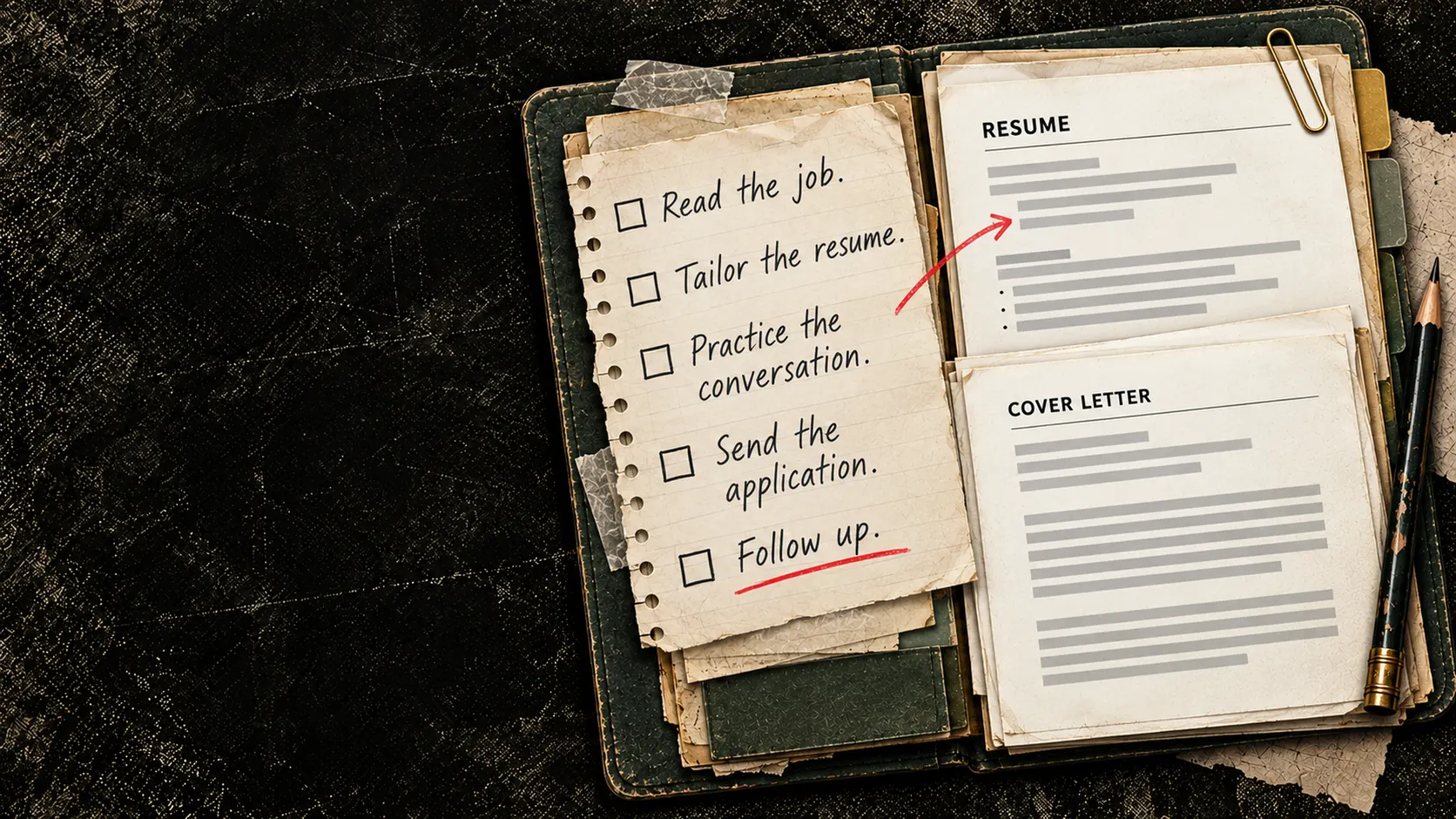
You don't need a premium subscription. You need a plan.
LinkedIn Premium costs $30/month. Career coaches charge hundreds. Corporate job search advice assumes you have a "professional network" and a college alumni database.
That's not how most people find work.
You need a job. You need it soon. Maybe you have a felony or a record and you're wondering where to even look. You need a job search strategy that works for warehouse, manufacturing, construction, and trades, not white-collar career coaching dressed up as universal advice.
This guide covers where jobs actually get posted, how to work with staffing agencies without getting screwed, when to walk in versus apply online, and how to find work when you don't know anybody. I wrote it because I kept hearing the same frustration from clients: "I'm applying everywhere and hearing nothing back." There's a better way.
Where Jobs Actually Get Posted
General Job Boards
These are the big ones. They work.
- Indeed: Still the biggest. Most employers post here.
- ZipRecruiter: Strong for warehouse, logistics, manufacturing.
- Craigslist: Yes, still. Especially for smaller shops, trades, and local work. Check the "jobs" section daily.
- Facebook Jobs: Underrated. Many local businesses post here, especially in trades and service industries.
Industry-Specific Job Boards
These focus on your field:
Manufacturing:
- ManufacturingJobs.com
- iHireManufacturing
- ManufacturingWorkers.com
- SME Jobs Connection
- WiMWorks (Women in Manufacturing, open to all)
Skilled Trades & Construction:
- SkilledTrades.com
- Trade Scouts
- Roadtechs.com (heavy industrial, power plants, refineries)
Logistics & Warehouse:
- JobsInLogistics.com
- IWLA job board (warehouse/3PL focused)
- Fleet Jobs (trucking/CDL)
- ASCM job board (supply chain)
The Reality Check
Online applications dominate initial sourcing. That's where employers cast the net. But referrals and staffing agencies still account for a huge share of actual hires. More on that below.
Staffing Agencies: Your Secret Weapon (If You Use Them Right)
Staffing is a huge industry, and a big chunk of it is industrial work: warehouse, manufacturing, general labor. For a lot of people looking for jobs with a felony, an agency is the fastest way in the door. This isn't a fringe strategy. It's how much of this work gets filled.
How Staffing Agencies Work
- You apply with the agency (free; legitimate agencies never charge you)
- They match you with open positions at client companies
- You work as a "temp" or "contract" employee
- If it goes well, you may convert to direct hire
Major Industrial Staffing Agencies
These are active nationwide and in Wisconsin:
- Express Employment Professionals
- Staff Management | SMX
- QPS Employment Group
- SEEK Careers & Staffing
- SITE Staffing
- Summit Workforce Staffing
- Aerotek (industrial/manufacturing)
- PeopleReady (general labor, construction)
Pros of Using Staffing Agencies
- One application, multiple employers: They do the legwork
- Faster access: They know who's hiring right now
- Temp-to-hire opportunities: Try before you commit
- Weekly pay: Most agencies pay weekly
- Flexibility: Can often choose shifts and assignments
Cons of Using Staffing Agencies
- Sometimes lower starting pay than direct hire
- Less job security: Assignments can end suddenly
- Limited benefits: Health insurance often minimal or delayed
- Less control: They decide where you go
How to Work With Agencies Effectively
- Sign up with 2-3 agencies: Don't put all eggs in one basket
- Be honest about your situation: Background issues, availability, transportation
- Stay in contact: Check in weekly. Squeaky wheel gets assignments.
- Treat temp jobs like auditions: Show up, work hard, get converted
- Ask about temp-to-hire: Know the path to permanent before you start
I've seen this work over and over. The people who treat temp assignments like tryouts are the ones who get brought on full-time.
Red Flags
- Any agency that asks YOU for money: Walk away. Legitimate agencies are paid by employers, not workers.
- Vague job descriptions: Get specifics before accepting
- Constant runaround: If they keep promising work but never deliver, move on
Temp-to-Hire: How It Actually Works
Many employers use temp-to-hire as a trial period. Here's the typical setup:
- Agency places you as a temp (usually 60-90 days, sometimes longer)
- You're technically employed by the agency during this period
- Employer evaluates your performance, attendance, and fit
- If they like you, they offer direct hire
- Agency may receive a conversion fee from the employer
Success Tips
- Attendance is everything: One no-call/no-show can end it
- Don't coast: They're watching more closely than you think
- Build relationships: Get to know supervisors and coworkers
- Ask for feedback: Show you want to improve and stay
Walking In: Does It Still Work?
Yes, but it depends on the employer.
Where Walk-Ins Work Best
- Small manufacturing shops: Often have "Help Wanted" signs
- Construction companies: Especially during busy season
- Local trades businesses: HVAC, plumbing, electrical contractors
- Restaurants and kitchens: Still very walk-in friendly
- Small warehouses: Not the big DCs, but local operations
Where Walk-Ins Don't Work
- Large distribution centers (Amazon, Walmart DC, etc.): All online
- Corporate manufacturing plants: HR gatekeepers, ATS systems
- Union shops: Must go through the hall
How to Walk In Effectively
- Dress appropriately: Clean work clothes, steel toes if you have them
- Bring copies of your resume: Even if they don't ask
- Ask to speak to a hiring manager or supervisor: Not just the receptionist
- Have your pitch ready: "I'm looking for work in [X]. I have experience with [Y]. Are you hiring?"
- Be ready to fill out an application on the spot
- Get a name and follow up: "Can I check back with you next week?"
Timing
- Early in the week (Monday-Wednesday): Before managers get buried
- Morning: 8-10am, after shift starts but before lunch rush
- Avoid Fridays: Everyone's mentally checked out
Networking Without LinkedIn (Finding Jobs When You Have a Record)
You don't need a professional network. You need any network.
Referrals Matter a Lot
Employers prefer workers who come recommended. A referral from a current employee reduces their risk and speeds up hiring. Industry data consistently shows referrals are one of the top sources for hires in warehouse, manufacturing, and trades.
Where to Build Connections
Staffing Agencies
The recruiter IS your network. Build a relationship. Stay in touch.
Workforce Centers / Job Centers
Free resources, job fairs, hiring events. They exist specifically to connect workers with employers.
Training Programs and Trade Schools
Community colleges, apprenticeship programs, and trade schools often have employer connections and job placement services.
Union Halls
If you're in a trade, union locals maintain out-of-work lists and dispatch members to job sites. Joining an apprenticeship often includes job placement.
Churches and Community Organizations
Many have job boards or know employers in the congregation.
People You Already Know
Tell everyone you're looking. Friends, family, former coworkers, neighbors. "Know anybody hiring?" is a legitimate strategy. I've seen more people land jobs through this one question than through any job board.
The Ask
Don't be awkward about it:
"Hey, I'm looking for work in [warehouse/manufacturing/construction]. Do you know anybody hiring, or anyone I should talk to?"
That's it. Plant seeds everywhere.
Timing and Seasonality
Hiring has patterns. Use them.
Seasonal Peaks
Warehouse and Logistics:
- Peak: September to December (holiday season)
- Companies hire thousands of seasonal workers starting in late summer
- Many seasonal roles convert to permanent
Construction and Outdoor Trades:
- Peak: Spring and Summer (especially in northern states like Wisconsin)
- Hiring slows significantly in winter
Manufacturing:
- More stable year-round, but can spike with contracts and orders
- Some plants have seasonal shutdowns (auto industry in July, etc.)
Best Time to Apply
- Early in the week: Monday through Wednesday
- Early in the day: Get your application in before managers schedule interviews
- Before peak season: Apply in August for holiday warehouse work, apply in March for construction season
How Fast Do Jobs Fill?
Plenty of employers in warehouse, manufacturing, and trades struggle to fill roles. But when they find someone good, they move fast, sometimes within days.
Translation: Apply quickly, follow up promptly, be ready to interview on short notice.
Wisconsin Resources
Job Centers
Wisconsin Job Center of Waukesha
- Free job listings and search tools
- Recruitment events and job fairs
- Connections to training and employer associations
- On-site interview days with local employers
JobCenterofWisconsin.com
- Statewide job listings
- Resume help and career resources
- Links to local workforce development boards
Manufacturing Associations
These connect workers with employers:
- Waukesha County Manufacturing Alliance
- Northeast Wisconsin Manufacturing Alliance
- Wisconsin Manufacturing Extension Partnership (WMEP)
Staffing Agencies Active in Wisconsin
- Express Employment Professionals
- SEEK Careers & Staffing
- QPS Employment Group
- SITE Staffing
- Staff Management | SMX
- Summit Workforce Staffing
What Hiring Managers Actually Look For
Forget the white-collar resume advice. Here's what matters for warehouse, manufacturing, and trades hiring:
On Your Resume
- Clear listing of relevant skills: Forklift, pallet jack, CNC, MIG/TIG, specific machines you've run
- Certifications and licenses: CDL, OSHA-10, HVAC license, apprenticeship status, forklift certification
- Verifiable work history: Dates, company names, job titles
- Reliability indicators: Attendance record, safety record, years at each job
In the Interview
- Availability: What shifts can you work? Overtime? Weekends?
- Transportation: How are you getting to work?
- Physical capability: Can you lift 50 lbs? Stand for 8 hours?
- Basic skills: What equipment have you operated? What's your safety training?
Soft Skills That Matter
- Reliability: Will you show up? Every day? On time?
- Teamwork: Can you work with others without drama?
- Willingness to learn: Technical skills can be trained; attitude can't
Phone Interview Tips
Many employers do quick phone screens before bringing you in. Be ready.
Before the Call
- Be near a quiet place: no background noise, TV, or kids screaming
- Have your resume in front of you
- Have supervisor names and contact info ready for reference checks
- Know your availability (shifts, start date, overtime)
During the Call
- Answer clearly: "This is [Name]"
- Keep answers short and concrete: What machines you've run, what loads you've moved, your last job duties
- Be ready for logistics questions:
- "Can you work second shift?"
- "Do you have reliable transportation?"
- "Can you lift 50 pounds repeatedly?"
- "When can you start?"
After the Call
- Ask about next steps: "What's the timeline for this position?"
- Follow up if you don't hear back: One call or email after 3-5 business days
Following Up: Does It Help?
Yes. Employers who move slowly lose candidates. Following up shows you're serious and keeps you top of mind.
How to Follow Up
After applying online:
- Call after 3-5 business days
- "Hi, I applied for the [position] earlier this week and wanted to confirm you received my application and see if there's anything else you need from me."
After a walk-in:
- Call or stop by after one week
- "I came in last week about the [position]. I wanted to follow up and see if you're still hiring."
After an interview:
- Email or call within 24-48 hours
- "Thanks for taking the time to meet with me. I'm very interested in the position and wanted to follow up."
Don't Overdo It
Follow up once or twice. After that, move on. Pestering doesn't help.
The Numbers Game
There's no magic number of applications that guarantees a job. But understand this:
- Volume matters: Especially in competitive markets
- Quality targeting matters more: Apply to jobs you're actually qualified for
- Speed matters: Jobs fill fast. Apply the day you see it.
A reasonable approach:
- Apply to 5-10 jobs per day when actively searching
- Sign up with 2-3 staffing agencies
- Check in weekly with agencies and promising leads
- Follow up on applications after a few days
Start your target list with employers that have dated evidence they hire people with records: jobs for felons.
Common questions
Where do I find jobs if I have a felony?
Start where the work actually gets filled: staffing agencies, your local job center, walk-ins at small shops, and people you already know. Agencies and referrals matter most for people with a record, because a recruiter or a friend can vouch for you before the background check ever comes up. For the resume itself, see our guide on writing a resume with a felony.
What are the best job boards for warehouse, manufacturing, and trades jobs?
For general warehouse and labor jobs: Indeed, ZipRecruiter, Craigslist, and Facebook Jobs. For manufacturing: ManufacturingJobs.com and iHireManufacturing. For skilled trades: SkilledTrades.com, Trade Scouts, and Roadtechs.com. For logistics and warehouse: JobsInLogistics.com, the IWLA job board, and Fleet Jobs for CDL positions.
Are staffing agencies worth it for warehouse and trades jobs?
For warehouse, manufacturing, and trades work, yes. They're not a last resort. They're a primary strategy. One application can reach several employers, temp-to-hire gives you a shot to prove yourself, and most agencies pay weekly. Sign up with 2-3 agencies, be honest with them about your background, and check in every week. Legitimate agencies never charge you; they're paid by employers.
How does temp-to-hire work?
A staffing agency places you as a temp, usually for 60-90 days. During that trial, the agency is your employer while the company watches your performance and attendance. If they like you, they offer direct hire. Attendance is everything: one no-call/no-show can end it.
Does walking into a business and asking for work still work?
Yes, for certain employers. Walk-ins work best at small manufacturing shops, construction companies, local trades businesses, restaurants, and small warehouses. They don't work at big distribution centers or corporate plants that hire online only. Go Monday through Wednesday, 8-10am, with resumes in hand.
Do I really need a resume?
Yes. Even if you fill out an application, a resume makes you look prepared. Keep it simple: one page, clear skills, work history with dates.
Should I apply to jobs I'm not fully qualified for?
If you're close, yes. Many employers will train. If the posting asks for 5 years of experience and you have 2, apply anyway. Worst case, no response. Best case, they're flexible.
When is the best time to apply for warehouse and trades jobs?
Monday through Wednesday, early in the day, so your application lands before managers schedule interviews. For seasonal work, apply in August for holiday warehouse jobs and in March for construction season in northern states like Wisconsin.
How long should I wait before following up?
3-5 business days after an online application, one week after a walk-in, and 24-48 hours after an interview. Follow up once or twice, then move on.
How important are referrals for getting hired?
Very. Employers trust workers recommended by current employees, union halls, or agencies they already use, because a referral lowers their risk. Tell everyone you're looking: friends, family, former coworkers, neighbors. "Know anybody hiring?" is a real strategy.
What Wisconsin resources exist for job seekers?
Wisconsin Job Centers, like the one in Waukesha, offer free job listings, hiring events, and training connections. JobCenterofWisconsin.com has statewide listings. Manufacturing groups like the Waukesha County Manufacturing Alliance and the Wisconsin Manufacturing Extension Partnership connect workers with employers.
The Bottom Line
You don't need LinkedIn Premium. You need:
- The right job boards: Indeed, Craigslist, niche sites for your industry
- Staffing agencies: Sign up with 2-3, stay in contact
- Direct outreach: Walk-ins still work for smaller employers
- Any network you have: Tell everyone you're looking
- Follow-up: Don't just apply and wait
The jobs are out there. The employers are struggling to fill them. Your job is to get in front of them and show you're reliable.
That's it. No premium subscription required.
Need Help With Your Resume?
Get your skills and experience on paper clearly before you start applying.
I specialize in resumes that actually get callbacks at Steel Man Resumes. I know the difference between a warehouse resume and a corporate one, and I know which one gets you hired.
Questions? Call (262) 391-8137 or email troy@steelmanresumes.com
Last Updated: September 2026
Sources: Wisconsin Job Center, Waukesha County Workforce Development, Indeed, BetterTeam, MainStreet Recruitment