

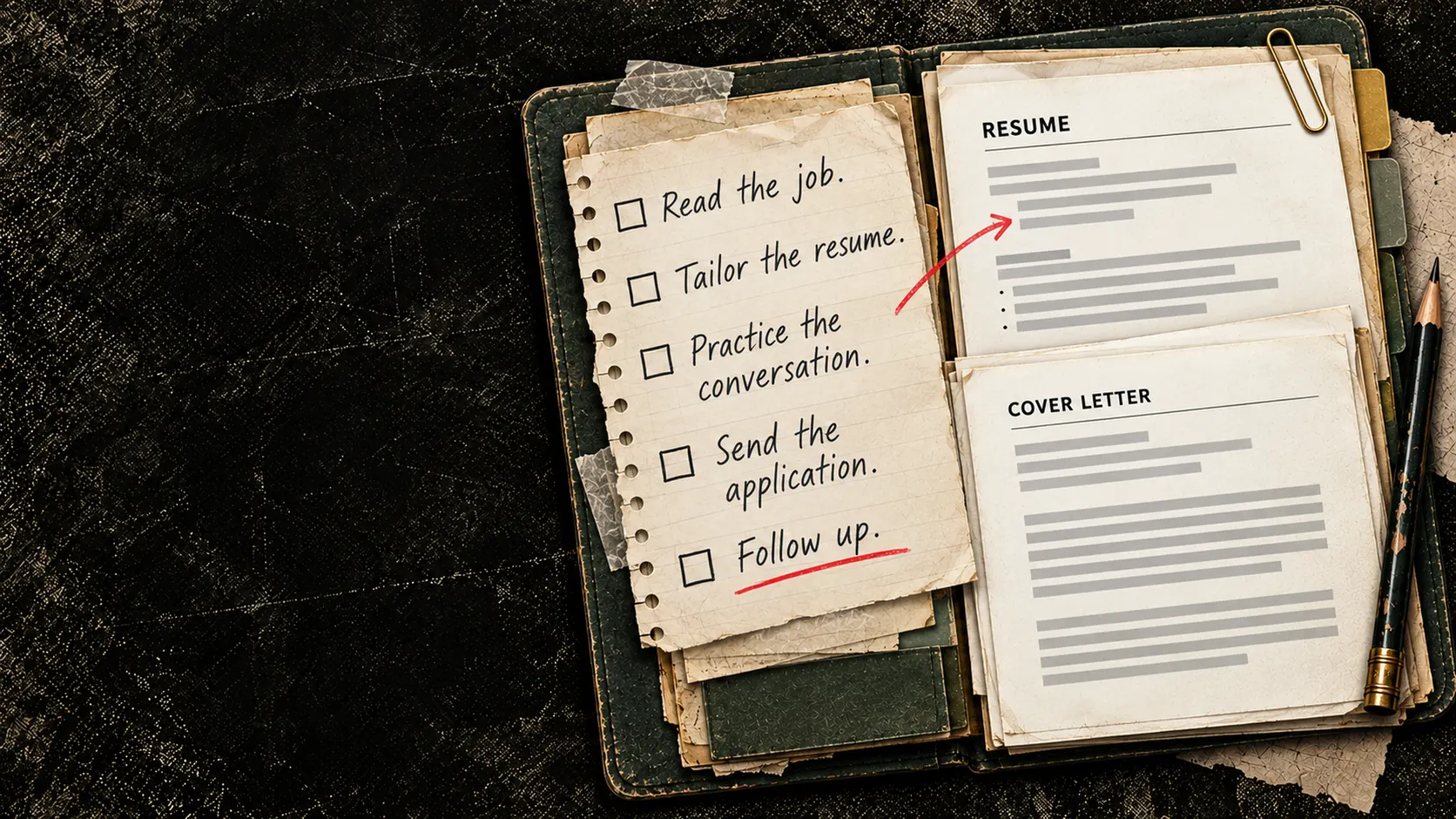
Your gap on paper might say "incarceration." Your real story is longer than that word, and so is your plan.
Most advice about jobs for felons was written with a man in mind. It talks about the background check, the Ban the Box laws, the industries that hire. All of that still applies to you. But if you're a woman coming home with a felony and looking for work, you're carrying a few things that advice usually doesn't mention: who's picking up your kids at 3pm, how you explain a gap that's part incarceration and part being the only parent in the house, and how much of your record connects to someone else's violence, not just your own choices.
None of that makes your job search harder in some vague, unfair way. It makes it different, and different problems need different strategy. The Sentencing Project reports that the number of women in prison has grown faster than the number of men over the past few decades. That means more women than ever are walking through this exact door right now. You are not the first, and the field is catching up, slowly, with employers and programs built for exactly this situation.
I've spent over a decade doing direct service work in reentry, starting at a halfway house, then through sober living homes, treatment centers, jails, and prisons across Wisconsin. I've coached plenty of women through this exact stretch: rebuilding a resume, prepping for the disclosure conversation, figuring out how to make a shift schedule work with a school pickup time. I'm not going to pretend I've lived what you've lived. What I can do is tell you what I've seen work, point you to real resources, and help you build a resume that tells your story straight without handing an employer more than they need.
Why This Isn't the Same Playbook
Three things show up differently in women's reentry cases than in men's, and all three change your strategy:
Caregiving load. Women in the justice system are far more likely than men to have been the primary caregiver for minor children before incarceration. Bureau of Justice Statistics research on parents in state prison has found mothers were much more likely than fathers to say they'd handled most of the daily care for their kids before they were locked up. That means your resume gap often isn't just "incarcerated." It's incarcerated and now solely responsible for getting kids to school, to the doctor, to childcare, on a schedule that has to work around a job.
Trauma and abuse history. National research on incarcerated women has consistently found high rates of prior domestic violence, sexual assault, or trafficking history in their backgrounds, sometimes connected directly to the offense on their record. This is well-documented, not a rare exception. It also means some of you are dealing with two separate things at once: a criminal record, and a safety situation that might still be live (an abuser who knows where you work, a trafficker you're staying clear of). That changes what you disclose, to whom, and how much detail you owe anyone.
Industry access. The industries most known for hiring people with records (warehouse, manufacturing, construction, trucking) have historically been male-dominated entry points. That's shifting (more on that below), but it means the "just go work a warehouse shift" advice that works for a lot of guys isn't automatically the easiest on-ramp for you. Healthcare, caregiving, food service, and customer service have often been more accessible, though healthcare comes with its own background-check wrinkle in Wisconsin that you need to know about before you apply.
None of this means your odds are worse. It means your plan has more moving parts, and I'd rather walk you through all of them now than have you find out about one of them the hard way in an interview.
The Caregiving-Plus-Record Gap: How to Frame It
If your resume gap includes both incarceration and full-time caregiving (before, during, or after), don't try to hide either piece. You don't need to announce a conviction on paper, but you also don't need to leave a five-year hole that looks like nothing happened.
Use a combination resume format, not a strict chronological one. Lead with a skills section, then a work history section that accounts for your time without over-explaining it. A caregiving gap is a completely normal thing to name directly:
Family Caregiver, 2021-2024
Managed household logistics, child care coordination, and appointment scheduling for a family of three. Handled budgeting, transportation planning, and school communication independently.
That's a real skill set. Scheduling, budgeting, coordinating multiple people's needs on a tight timeline: that's project management with different job titles. Frame it that way, because it's true, not because it's a trick.
If part of that same window includes incarceration, keep the dates honest: the caregiver entry covers only the time you were actually home doing that work. Don't stretch it over time you were inside. You don't have to list "Incarcerated" as a line item on the resume, but be ready to name it plainly and briefly if it comes up in the interview or the background check. If an application asks directly about convictions or pending charges, answer truthfully. In Wisconsin, private employers are allowed to ask about those; what the law limits is how they use the answer (more on your rights below). Arrests that never led to a conviction are different: in most jobs a Wisconsin employer isn't supposed to ask about them at all, unless the job requires you to be bondable. (Wisconsin law as of September 2026.)
Sample disclosure script (combined gap)
"I took time out of the workforce to be my kids' full-time caregiver, and during part of that time I was also incarcerated. I've since completed [program/training/certification], and I'm ready to bring the same reliability I showed managing a household to this role. I'm happy to answer any questions you have."
Short. Factual. Doesn't apologize for existing. Doesn't over-explain. You control the amount of detail. You're not required to narrate the offense, and in most cases you shouldn't.
Turning caregiving years into resume bullets
A lot of women tell me they don't know how to write about years spent raising kids or running a household, so they leave that section thin. Don't. Write it the way you'd write any other job, because it was one. A few examples of how that translates:
Coordinated daily schedules for three household members, including school transportation, medical appointments, and after-school activities, with zero missed appointments over three years.
Managed a household budget on a fixed income, including bill prioritization and negotiating payment plans with creditors.
Served as primary point of contact for school staff, coordinating IEP meetings and communicating with three separate teachers on a weekly basis.
Every one of those is true to what the work actually was, and every one of those reads like a real job skill because it is one. Employers hire for reliability, organization, and the ability to manage competing demands, and caregiving builds all three.
Building the rest of the resume
Once the gap is framed, the rest of the resume works the same as it would for anyone: lead with a skills summary at the top, list any certifications or programs you've completed since release (even short ones; a two-week job readiness course is worth a line), and keep job duties in the work history section written in plain, active language. If you completed programming through Meta House, the Benedict Center, or a WRTP | BIG STEP training track, list it. It signals you followed through on something structured.
When Your Record and a History of Abuse Overlap
I'll say this plainly and I'll say it once: if part of your record is connected to a domestic violence, sexual assault, or trafficking situation, that is not something you owe an employer an explanation of. You are not required to disclose that connection in an interview, on an application, or to a background check company. Your safety and your privacy come first.
Here's the honest picture of the law. Wisconsin law does not list being a victim of domestic abuse, sexual assault, or stalking as its own protected category at work (Wis. Stat. 111.321, as of September 2026). What it does say: an employer can't fire you because you were subpoenaed to testify in a criminal case (Wis. Stat. 103.87). Your conviction record itself is protected by the "substantially related" rule (Wis. Stat. 111.335, covered below). If you think you were treated unfairly because of what happened to you, talk to legal aid.
Practically, here's how I coach clients through this:
- You control the narrative. If asked about a conviction connected to a domestic violence or trafficking situation, you can describe the general circumstances ("the situation involved a partner who was controlling my choices at the time") without going into detail you're not ready to give a stranger in an interview.
- You don't have to relive it to be believed. A good employer doesn't need trauma details to decide to hire you. If an interviewer is pushing for more than you're comfortable giving, that's information about them, not a requirement on you.
- If safety is still a live concern, a case manager at a reentry or domestic violence organization can help you think through things like whether to use a workplace address that's harder to trace, or how to handle a protective order interacting with an employer's records.
If you need to talk to someone about a domestic violence, sexual assault, or trafficking situation, past or ongoing, these are real, free, confidential resources:
- National Domestic Violence Hotline: 1-800-799-7233, or text START to 88788
- National Human Trafficking Hotline: 1-888-373-7888, or text 233733
- End Domestic Abuse Wisconsin (endabusewi.org): statewide coalition with local shelter and advocacy referrals across Wisconsin
Jobs for Women With a Felony: Industries Worth Your Time
Healthcare and caregiving work
Home health aide, certified nursing assistant (CNA), and direct care roles are some of the most accessible entry points into steady, decent-paying work, and demand in Wisconsin is high. Here's the wrinkle you need to know before you invest time in a CNA course: Wisconsin's Caregiver Law (administered by the Department of Health Services) sets specific convictions that bar you from caregiving jobs in regulated settings like nursing homes and home health agencies. Not every conviction bars you. The list is specific (DHS publication P-00274 spells it out), and even a barred conviction can sometimes be overcome through DHS's rehabilitation review process, which lets you petition to have your eligibility restored. One limit: rehabilitation review can't override the federal rule that bars anyone with a substantiated finding of abuse, neglect, or misappropriation of property from working in a federally funded nursing home. Before you enroll in a CNA program, it's worth a call to a workforce agency or DHS to find out where your specific record falls, so you're not surprised after you've already paid for the class.
Trades, manufacturing, and CDL/trucking
This is the space where the door has opened the most for women. WRTP | BIG STEP, a Milwaukee-based workforce nonprofit, runs She Drives the Future, a 12-week program that combines entry-level construction skills training with CDL preparation, built specifically for women, funded through a U.S. Department of Labor Women's Bureau grant, and offered at no cost. Ask them directly how they handle records before you enroll; that's a normal question for a workforce program. Some trucking companies hire drivers with records, and nonprofits like FreeWorld offer CDL training aimed at people with records. Check the current eligibility rules for any program before you sign up, since CDL licensing has its own federal disqualifications for some offenses.
Manufacturing is worth a look too. Many shops judge older or nonviolent records case by case, and in Wisconsin they have to follow the "substantially related" rule either way.
Food service, hospitality, and customer service
These remain some of the fastest paths back into a paycheck because turnover is high and hiring managers often have real authority to make case-by-case calls. They're also some of the most schedule-flexible for parents, with more part-time and shift-swap options than a lot of other industries.
Retail and warehouse/logistics
Large employers with written policies on hiring people with records (several national chains have public statements on this) tend to have more consistent, predictable HR processes, which can actually work in your favor, since a documented policy is easier to point to than an individual manager's mood.
Interview Scripts for the Situations That Actually Come Up
You already have one script above for a combined caregiving-and-record gap. Here are two more scenarios I get asked about constantly.
"Have you ever been convicted of a felony?"
If the question is on the application or asked in the interview (in Wisconsin, private employers are allowed to ask about convictions and pending charges), answer honestly and briefly, then pivot to what you've done since:
"Yes, I have a conviction from [year]. Since then I've completed [program/certification], and I've been focused on building a stable, reliable work history. I'd welcome the chance to talk through any questions you have."
Don't volunteer more than the question asks. Don't apologize repeatedly. State it once, pivot once, move on.
"Something came back on your background check that I wasn't expecting."
This happens, and it's not a dead end. Ask what specifically came back before you respond. Background check reports are wrong or outdated more often than people expect, especially around expunged records or cases that were dismissed. If it's accurate, respond the same way as the direct question above: acknowledge it plainly, name what's changed since, and ask what their process is from here. If you believe the report is inaccurate or you were not given the legally required notice before an adverse action, that's worth a call to Legal Action of Wisconsin. Federal law (the Fair Credit Reporting Act) requires employers to notify you and give you a chance to respond before rejecting you based on a background check.
Scheduling and Childcare: The Practical Filter Most Guides Skip
A job you can't actually get to on time, every time, because of childcare logistics, isn't a good job for you right now, no matter how good the pay looks. Before you apply anywhere, run every opening through this filter:
- What shift is it, actually? "Full-time" can mean a 6am start or a rotating schedule. Ask before you interview, not after you're offered the job.
- Is licensed childcare available for that shift? Overnight and early-morning childcare is genuinely scarce in most of Wisconsin. If a job requires a 5am start and you don't have someone lined up, that's a real problem to solve before you accept, not after.
- Wisconsin Shares is the state's child care subsidy program for eligible working parents. It can significantly cut what you pay for licensed care while you're building income. It's administered through your county's child care agency; apply as soon as you're actively job searching, not after you've already started, since processing takes time.
- Ask directly in the interview. "Is there flexibility in start time, or an option to swap shifts with another employee?" is a completely normal question. An employer who reacts badly to it just told you something useful about what it'll be like to work there.
If your kids are currently with another caregiver
A lot of women coming home are working toward reunification with children who stayed with a grandparent, other relative, or foster placement during incarceration. That's its own process, usually run through your county's child welfare agency and possibly family court, and it runs on its own timeline separate from your job search. Don't wait on reunification to start building income and stability. A steady job and stable housing are usually part of what a court or caseworker wants to see before reunification moves forward, so the job search and the reunification process support each other rather than compete.
Building Your Support Network
You don't have to run this search alone, and I'd actually push back if you tried to. The women I've seen land solid jobs fastest are almost always working with at least one of these at the same time:
- A case manager at a reentry-focused organization (like the Benedict Center or Meta House) who can track your goals across housing, treatment, childcare, and employment at once, instead of you juggling four separate systems solo.
- A peer support connection: someone further along in reentry who's navigated the same combination of record, caregiving, and job search. Programs run through the organizations listed below often have built-in peer groups; if yours doesn't, ask if they know of one nearby.
- A workforce counselor at Employ Milwaukee or your county Job Center, who can point you toward training funded through WIOA (the Workforce Innovation and Opportunity Act) that you may not know you qualify for.
None of this is a sign you can't handle it yourself. It's just faster with backup.
Know Your Legal Protections
The Wisconsin law that matters most here:
Wis. Stat. 111.335, part of the Wisconsin Fair Employment Act, makes it illegal for most employers to refuse to hire you, or fire you, based on an arrest record, or a conviction, unless the circumstances of the conviction are "substantially related" to the specific job. A theft conviction and a job handling cash can be substantially related. A decade-old drug conviction and a warehouse picking job usually is not. It's on the employer to show that connection, not on you to disprove it, according to the state agency that enforces the law.
If you believe the conviction-record protection was violated, Wisconsin's Equal Rights Division (part of the Department of Workforce Development) is where a complaint gets filed. You don't need a lawyer to start that process, though talking to Legal Action of Wisconsin or a local legal aid office first is worth your time if you think you have a real case.
Wisconsin and National Resources Built for Women's Reentry
These organizations focus specifically on women, not general reentry populations, and that focus matters. Gender-responsive programming tends to build in the childcare, trauma-informed care, and scheduling flexibility that general programs sometimes miss.
- Benedict Center Women's Reentry Program (Milwaukee): works with women at the Milwaukee County Community Reintegration Center and after release, addressing trauma, substance use, employment, and basic needs like ID and housing through case management.
- Meta House (Milwaukee): gender-responsive substance use treatment that allows children to stay with mothers in residential treatment, plus job readiness and parenting support.
- Community Advocates / Milwaukee Women's Center / Bottomless Closet (Milwaukee): interview-ready clothing, grooming, and job-readiness coaching, alongside domestic violence and homelessness services.
- Employ Milwaukee Reentry Employment Services: connects job seekers with records to employers and training across the region.
- WRTP | BIG STEP (Milwaukee): trades, manufacturing, and the She Drives the Future women's CDL/construction pre-apprenticeship program described above.
- End Domestic Abuse Wisconsin (endabusewi.org): statewide coalition connecting you to local domestic violence shelters and advocates.
- A New Way of Life Reentry Project: a national model (Los Angeles-based) for gender-responsive reentry housing and case management, useful as a reference point even if you're not in California; their published materials are a good primer on what good gender-responsive reentry programming looks like.
- Legal Action of Wisconsin: free civil legal aid, useful for background check disputes, expungement questions, and Fair Employment Act complaints.
- Your county Job Center / Employ Milwaukee: access point for WIOA-funded training, resume help, and job placement support regardless of your record.
Common questions
What jobs can women with a felony get?
More than most people think. Food service, hospitality, customer service, retail, and warehouse work are some of the fastest ways back to a paycheck. Trades and CDL programs built for women, like WRTP | BIG STEP's She Drives the Future in Milwaukee, are another path. Healthcare and caregiving jobs are possible too, but in Wisconsin check the Caregiver Law's list first, because some convictions bar you from regulated caregiving jobs.
Do I have to tell an employer about a domestic violence or trafficking history?
No. You're never required to explain the circumstances behind a conviction, including whether it connects to domestic violence, sexual assault, or trafficking. If your conviction came from something an abuser or trafficker forced, and you think it might qualify for expungement or other relief, take that to a legal aid organization like Legal Action of Wisconsin, not to a job interview.
How do I explain a resume gap that includes both prison and caregiving?
Name the caregiving time directly as a role with real skills (scheduling, budgeting, coordination), and date it honestly: only the time you were actually home. You don't have to list the incarceration on the resume itself, but be ready to say it plainly and briefly if it comes up in the interview or the background check, using a short statement you practiced ahead of time.
Are there caregiving or healthcare jobs in Wisconsin I can get with a record?
Often, yes. Most jobs outside regulated healthcare settings don't have an automatic disqualification list. Healthcare and caregiving jobs covered by Wisconsin's Caregiver Law do have specific convictions that create bars (DHS publication P-00274 lists them), and some bars can be addressed through the state's rehabilitation review process. Call DHS or a workforce agency before you pay for a CNA class.
Are trades and CDL jobs realistic for women with a record?
Yes. Programs like WRTP | BIG STEP's She Drives the Future in Milwaukee were built to bring more women into trades and trucking. Ask any program how it handles records before you enroll, and know that commercial driving has its own federal disqualification rules for some offenses.
Where can I find childcare help while I look for work?
Wisconsin Shares, the state's child care subsidy program, can lower what you pay for licensed child care if you qualify. Apply through your county child care agency as early as possible, since processing takes time. Reentry organizations like the Benedict Center and Meta House can also connect you to childcare resources as part of case management.
What if a background check comes back with something wrong or outdated?
If the employer used a background check company, federal law (the Fair Credit Reporting Act) requires them to notify you and give you a chance to respond before rejecting you based on the report. Ask to see exactly what came back. Reports are often wrong or out of date, especially for expunged or dismissed cases. Legal Action of Wisconsin can help you dispute an inaccurate report.
The Bottom Line
Your situation has real, documented differences from a general reentry job search, and pretending otherwise doesn't help you. You may be carrying a caregiving load your resume needs to name honestly. You may be carrying a history that's nobody's business but yours to disclose or not. And the industries most guides point you toward first weren't always built with you in mind, though that's changing.
None of that makes you a harder case. It makes you a specific one, and specific cases get solved with specific plans: a resume that frames your gap honestly, a target list of employers and programs that actually work with women in your situation, and a clear answer ready for the moment your record comes up.
Ready to Build Your Resume?
Steel Man Resumes built Forge, a free career intelligence tool made for exactly this situation: people with records who need a resume that survives the background check conversation instead of getting stopped by it. It walks you through framing a combined caregiving-and-record gap, matching your real skills to real job postings, and generating a resume you can send today.
No cost. No credit card. No catch.
I've built this guide from over a decade of direct reentry work across Wisconsin's jails, prisons, treatment centers, and halfway houses, and from coaching women through exactly this transition. I don't carry your specific experience, but I know the system you're navigating, and I know what's worked for the clients I've sat across the table from. If you want to talk through your specific situation, reach out directly.
Call (262) 391-8137 or email troy@steelmanresumes.com
Last Updated: September 2026
Sources: The Sentencing Project, "Incarcerated Women and Girls" fact sheet; Bureau of Justice Statistics, "Parents in Prison and Their Minor Children"; Bureau of Justice Statistics, "Women Offenders" special report; Wisconsin Statutes 111.321 and 111.335 (Wisconsin Fair Employment Act) and 103.87; Wisconsin Department of Health Services, Caregiver Background Check Program and Publication P-00274; Wisconsin Department of Workforce Development, Equal Rights Division; Benedict Center (benedictcenter.org); Meta House; Community Advocates / Milwaukee Women's Center; Employ Milwaukee; WRTP | BIG STEP (wrtp.org) and U.S. Department of Labor Women's Bureau WANTO grant announcement; End Domestic Abuse Wisconsin (endabusewi.org); National Domestic Violence Hotline (thehotline.org); National Human Trafficking Hotline (humantraffickinghotline.org); A New Way of Life Reentry Project.