Troy's letter / Volume 009 / The Road In, part 1
What jobs can't you get with a felony? Fewer than you've been told, and every no has a road.
In five years the FDIC approved 276 bank waivers for people with records and denied none. Nobody puts that on the lists. This is the first issue of a series: every barred job, when the bar ends, the door, and the road that gets you to it. With a free checker.
Open the checkerNo account. Nothing you type is saved.
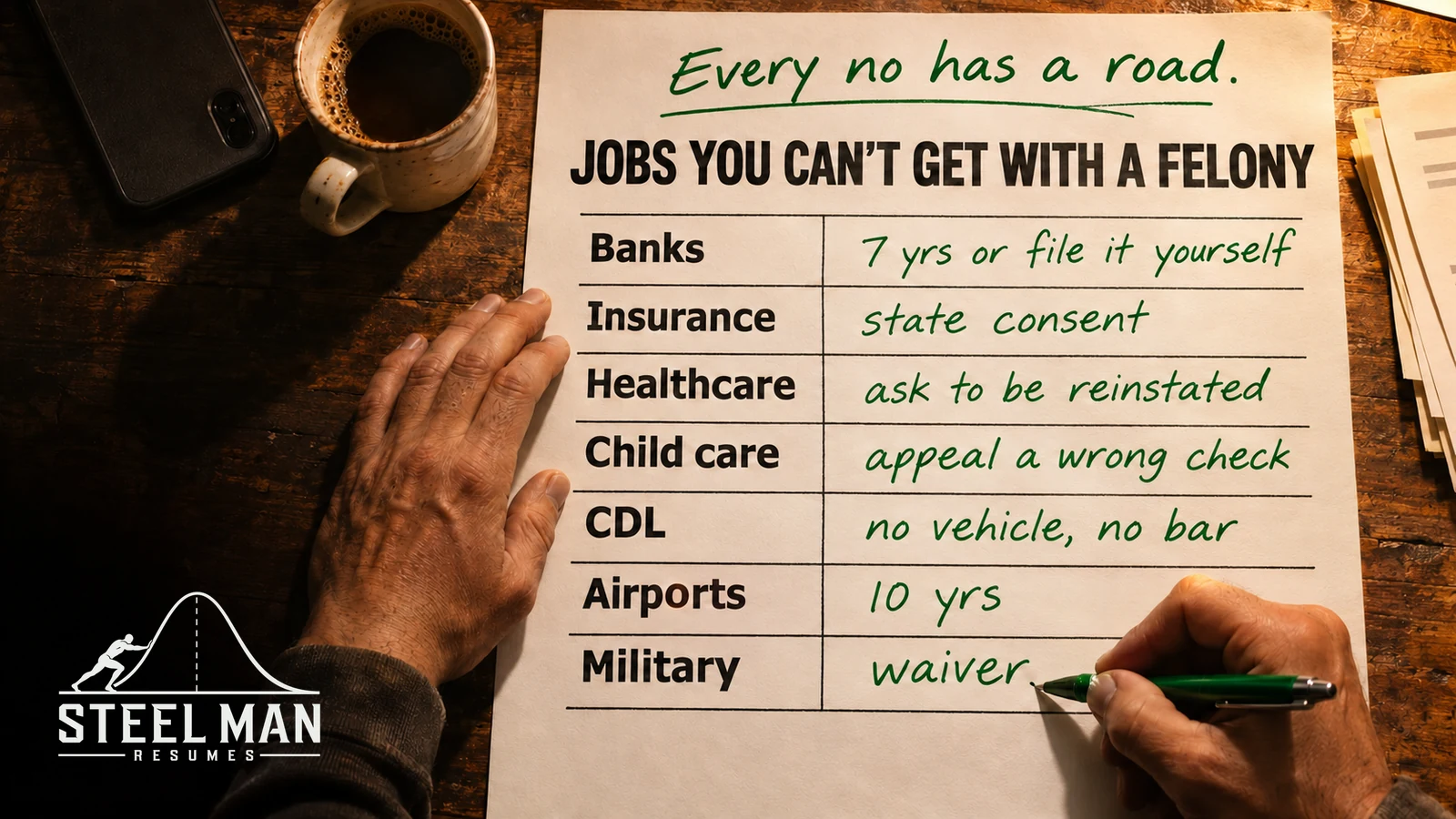
You've seen the lists. Banks. Nursing. Trucking. Day care. Airports. The military. Every one of them stops at no.
Here's what they don't tell you.
In the five years before a 2022 banking law, the FDIC acted on 345 complete waiver applications from people with records who wanted to work in a bank. It approved 276. It denied none. The rest were sent back or pulled, some because the person didn't need a waiver at all. That's from the FDIC's own report to Congress.
So I went back to the law for every job on the lists. The statutes, the federal rules, the agency forms. Most bars end on a date. Most have a door. A few are real walls, and I'll name them.
And there's one more thing in those rules that nobody tells you.
01
The road is the application
When an agency decides whether to let you in, it says in writing what it weighs.
The FDIC weighs your "employment history, letters of recommendation," and the programs you finished. The military wants "letters of recommendation from responsible community leaders." Federal hiring looks at "efforts toward rehabilitation." TSA weighs restitution and anything else that shows you're not a threat.
Read that again. The work you do while you wait is the thing they decide on.

So if they tell you no, you don't stop. You take the job you can get today. You show up. You get the manager who'll put it in writing. You finish the course. Every step on that road is evidence, and when you get to the door, you walk in carrying it.
The long road is harder. It also gives you more than the short one ever would: the experience, the people who'll vouch for you, and a story nobody can take from you.
02
The door that closed this month

Since September 21, people with a felony can ask the Justice Department to restore their federal gun rights. That matters for work, because armed security and most police jobs need it.
On November 4 the department posted this: "We have reached our limit of 5,000 new applicants, so the application website is temporarily closed." It opens again in January 2027, for 500 more people, and the $30 fee starts then.
Our own guide said you could apply now. That stopped being true, and I fixed it.
If this is your door, use the time until January. You'll need your court papers, proof your sentence is done, fingerprints, and sworn statements from three people who've known you at least three years and aren't related to you. And know this before you file: if you're still on probation or parole, or you still owe fines or restitution, the rule counts you as still serving your sentence. That's a presumed denial. Finish that first.
03
The road, job by job
Banks
The noa conviction for dishonesty, breach of trust or money laundering. Drug possession isn't one of them.
Start nowhandle money for an employer that isn't a bank or a credit union. Handle it clean.
The clockthe bar ends on its own 7 years after the offense, or 5 years after you got out, or 30 months after sentencing if you were 21 or younger. Expunged or sealed ends it too.
The doorbefore that, file the FDIC's Section 19 waiver yourself. You don't need a bank to sponsor you. Credit unions use NCUA Form 3250.
Insurance
The noa felony involving dishonesty or breach of trust. It has no end date.
Start nowthere's no side door inside insurance. Build your record somewhere that trusts you with money or people's information.
The doorwritten consent from your state's insurance regulator. Call your state insurance department first. Most use the same short form, but Florida's financial services department says it doesn't issue them, so don't guess.
Stocks and brokerage
The noany felony in the last 10 years.
Start nownot inside a brokerage firm. Even a clerical job there needs approval.
The clock10 years from the conviction date.
The doora firm that wants you files for you and pays $5,000. For a clerical job, FINRA can approve it without a full hearing.
Healthcare
The nothe federal exclusion list covers health care fraud, patient abuse, Medicare or Medicaid crimes, and felony drug distribution or prescribing. Simple possession isn't on it.
The clockat least 5 years for a first exclusion, 10 with one prior, permanent with two.
The doorgetting back in isn't automatic. You have to ask. Start 90 days before your end date, by email to reinstatements@oig.hhs.gov.
CNA and direct care
The nothat's your state's rules, not federal law.
Start nowbefore you pay for training, ask your state's caregiver registry for its review or waiver.
The doorWisconsin has a Rehabilitation Review you apply for online. Illinois has a Health Care Worker waiver it says usually takes three to four weeks.
Child care
The nothe federal list covers every licensed child care provider, not only the ones taking federal money. Murder, child abuse, spousal abuse, rape, kidnapping, arson, assault or battery, a violent misdemeanor against a child, or a sex offender registry.
The wallfederal law sets no end date for those.
The clocka drug felony is different. It ends 5 years after the offense, and some states will review it sooner.
The doorif the check is wrong or doesn't show how your case ended, every state has to let you appeal it.
CDL
The noa felony with a vehicle. Using one in a drug felony or a human trafficking felony is a lifetime bar with no way back. A felony that had nothing to do with a vehicle doesn't take your CDL.
Start nowdriving work that doesn't need a CDL.
The clocka first felony with a vehicle is 1 year, 3 if you were hauling hazmat.
The doormost other lifetime bars can be lifted by your state after 10 years, once you finish a rehab program the state approves. Not every state offers it. Ask your licensing office.
Ports and hazmat (TWIC)
The nomost offenses on the TSA list.
The clockmost of them only count within 7 years of the conviction or 5 years of release.
The dooryou can ask TSA for a waiver for almost everything except espionage, treason, sedition and terrorism. Send it in writing with your application. Don't wait for the denial.
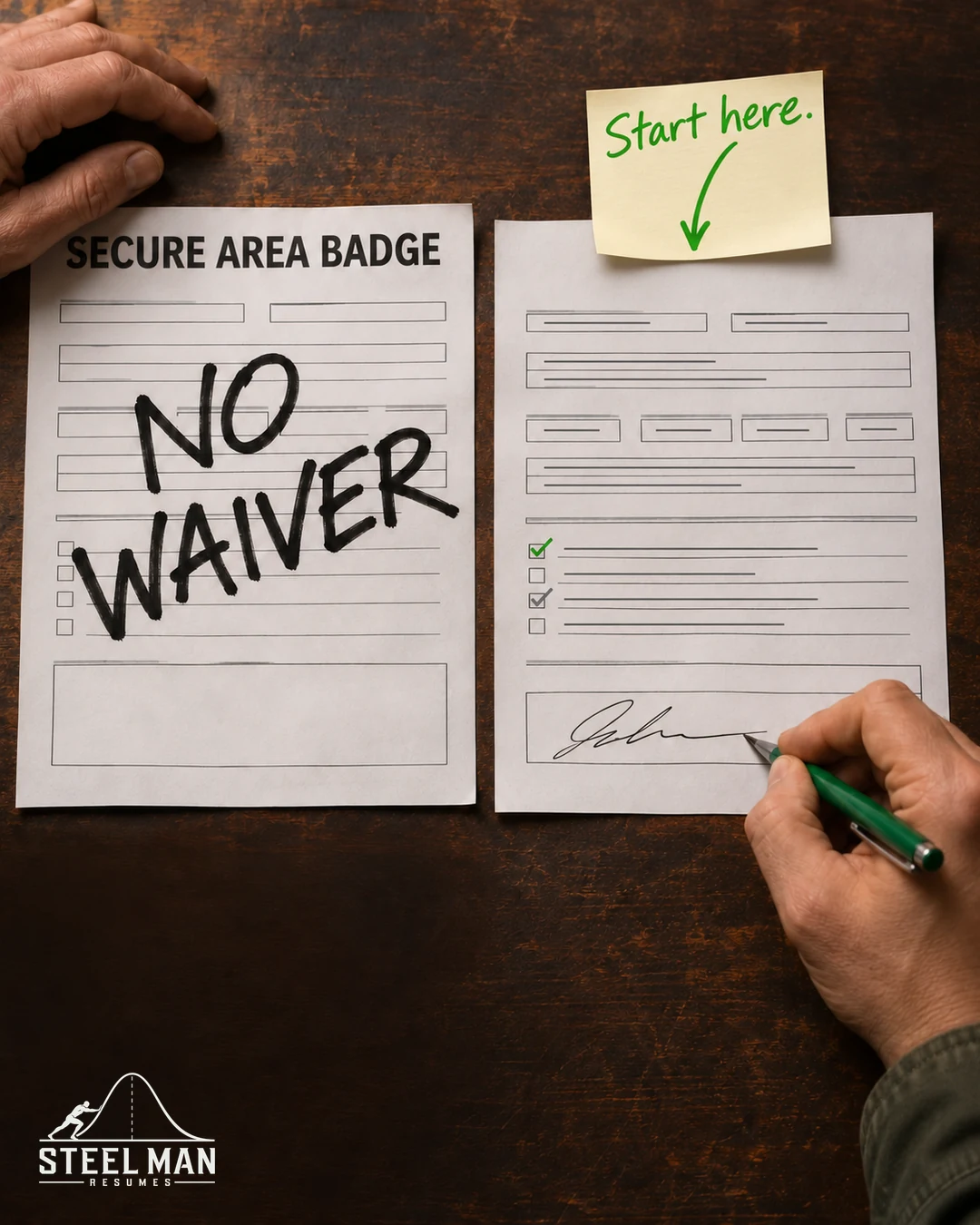
Airport badges
The walla listed conviction in the last 10 years means no badge for the secure area, and there's no waiver.
Start nowairport jobs outside the secure area aren't covered by this rule.
The clock10 years from the conviction.
The doorif your record is wrong, you have 30 days after the airport tells you to say in writing that you're correcting it.
Armed security
The nothe federal gun ban.
Start nowunarmed security is a state license question. Check your state's rules for your offense.
The doora pardon, expungement, set-aside or restoration of rights lifts the federal ban unless it says you still can't have a gun. Or the federal application, when it opens again in January.
The military
The noa felony needs a waiver, and you can't enlist while you're on probation, parole or bond.
The wallno waiver for a felony sex offense, a registration requirement, or a domestic violence conviction covered by the federal gun ban.
The dooreach branch grants waivers case by case. Bring certified court papers and letters from people in your community to the first recruiter meeting.
Federal jobs
The nothere isn't a blanket one.
The doormost agencies can't ask about your record until after a conditional offer. Then they weigh how recent it was and what you've done since. If one asks early, write down the date and who asked. You have 30 days to complain.
04
The checker
Pick the job. Answer a few questions about your record. It tells you which federal bar applies, whether time has already cleared it, and the form or office that gets you in. It doesn't need an account and it doesn't save anything you type.
One more thing

If you get a denial letter, answer it. Every one of these systems gives you a window to respond, and it's short. Don't let it sit.
If you're helping someone
Before someone you work with spends money on training, sit down with the checker together, with the actual court papers in front of you. Most of these doors turn on the exact charge and the exact date, not what someone remembers.
This is a series

Every week I'll take one of these jobs and walk the whole road: the law, the door, the jobs on the way, and what people who got there say worked.
If you got into one of these jobs with a record, reply and tell me how. Which state, which job, what they asked for, how long it took. I'll keep your name out of it. Every road you send makes the next person's shorter.
Troy
The full guide, with every bar and every way in: jobs you can't get with a felony.
Get the next one
One letter a week from Troy. The Road In goes job by job, one road at a time. Free, with a link to unsubscribe in every issue.
Sources
Checked November 22, 2026.
- FDIC, Fair Hiring in Banking Act Report to Congress, December 12, 2024
- 12 CFR 303.229, what the FDIC weighs
- 32 CFR 66.7, military conduct waivers
- 5 CFR 731.202, federal suitability
- 49 CFR 1515.7, TSA waivers
- U.S. Department of Justice, Federal Firearm Rights Restoration application, updated November 4, 2026
- DOJ final rule, 91 FR 54054, August 20, 2026, effective September 21, 2026
- 28 CFR part 107
- 18 U.S.C. 921, 922, 925(c)
- 12 U.S.C. 1829, FDIC Section 19
- FDIC Section 19 application instructions, updated September 9, 2026
- NCUA Form 3250
- 18 U.S.C. 1033
- Florida Department of Financial Services, criminal histories
- 15 U.S.C. 78c(a)(39)
- FINRA, statutory disqualification and eligibility proceedings
- 42 U.S.C. 1320a-7
- HHS-OIG exclusions FAQ, updated November 6, 2026
- Wisconsin DHS Rehabilitation Review, revised November 25, 2025
- Illinois Health Care Worker Registry waivers
- 42 U.S.C. 9858f
- 45 CFR 98.43
- 49 CFR 383.51
- 49 CFR 1572.103
- 49 CFR 1542.209
- 10 U.S.C. 504
- 5 U.S.C. 9202 and 5 CFR part 754