Check your record
before they do.
Virginia started sealing old records on its own last week. Good. Nobody's going to call you about it.
On October 1, Virginia started sealing some old records without anybody filing anything. Petit larceny. Disorderly conduct. Some trespassing. Every marijuana possession record, conviction or not. The waiting period is seven years clean for a misdemeanor and ten for a felony.
That's a big deal. Once a record is sealed in Virginia, most employers can't make you tell them about it, and you can leave it off the application. A lot of people are going to get their name back.
Here's the part that worries me. Nobody mails you a letter. The state does the work quietly and you find out when you find out, which for a lot of people is going to be the day they sit across from somebody holding a background check.
Bryan Kennedy, who chairs Justice Forward Virginia, said it better than I can when he talked to WSLS: "Don't assume it was sealed. Don't assume it wasn't sealed."
So check. Before you answer the box on an application, know what's on your record. Not what you think is on it. What's actually on it.
Virginia Clean Slate Act
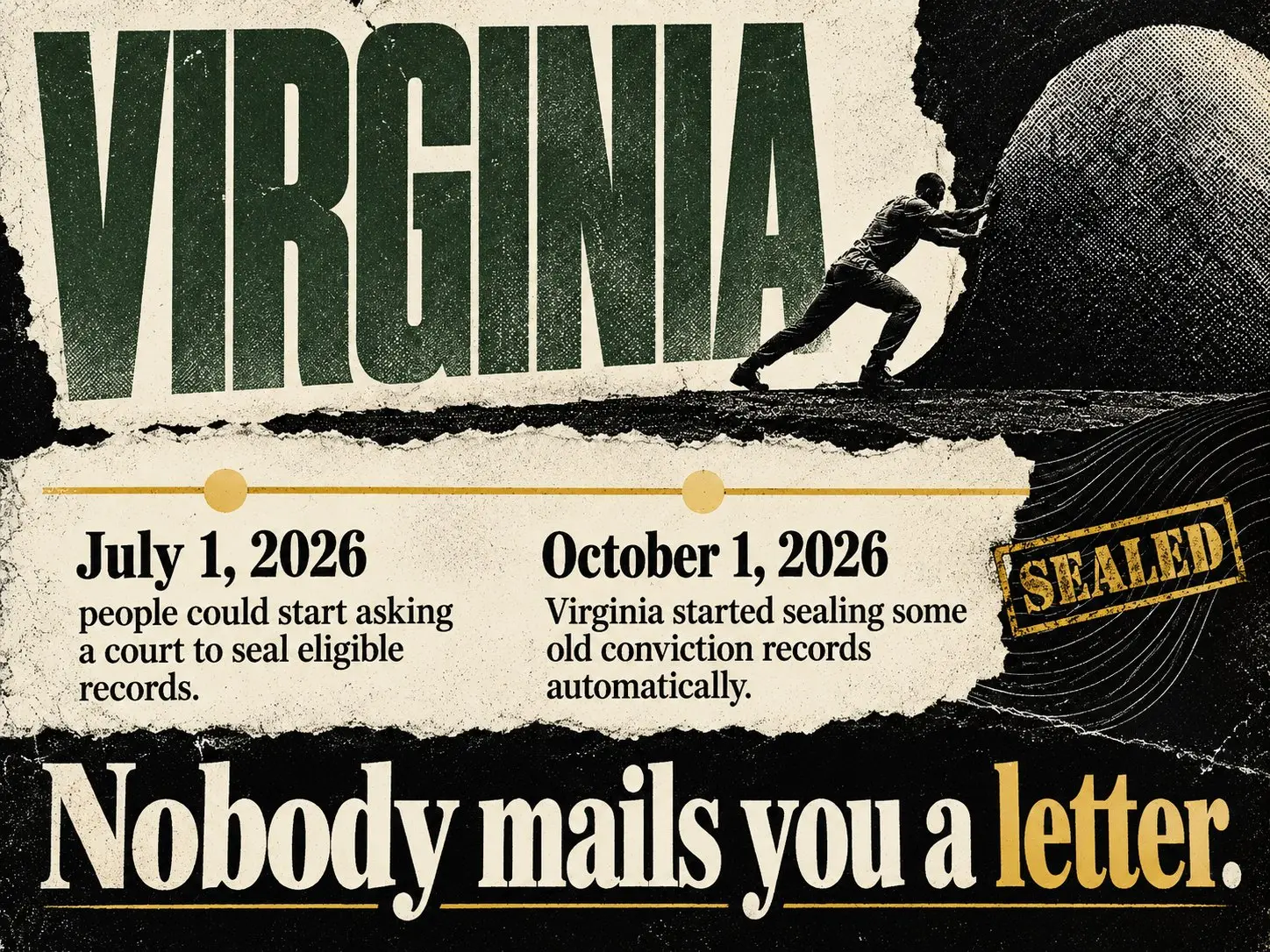
- July 1, 2026
- people could start asking a court to seal eligible records.
- October 1, 2026
- the state started sealing some conviction records automatically.
- Waiting period
- 7 years with no new conviction for a misdemeanor, 10 for a felony.
- After it's sealed
- an employer can't require you to disclose it, and you don't have to include it (Va. Code § 19.2-392.15).
The limits: courts, prosecutors and police can still see it. Law enforcement jobs, jobs where state or federal law requires the question, and security clearances are exceptions.
What I did this week
This is the same thing I've been doing on Steel Man Resumes, just pointed the other direction.
This past weekend I started writing to employers and asking them one question. Will you put it in writing that you hire people with records? Not a maybe on the phone. In writing, from them.
They're writing back. Laughing Bear Bakery in St. Louis said yes. Garden Time in Providence said yes. When an employer answers, their listing on SMR moves up to Validated, and you can see the date we checked and the date it runs out.
You check your record. We check the employer. Nobody should walk into an interview going off what they assume.
Before you answer the box.
A few minutes, four steps. Nothing you type here leaves this page.
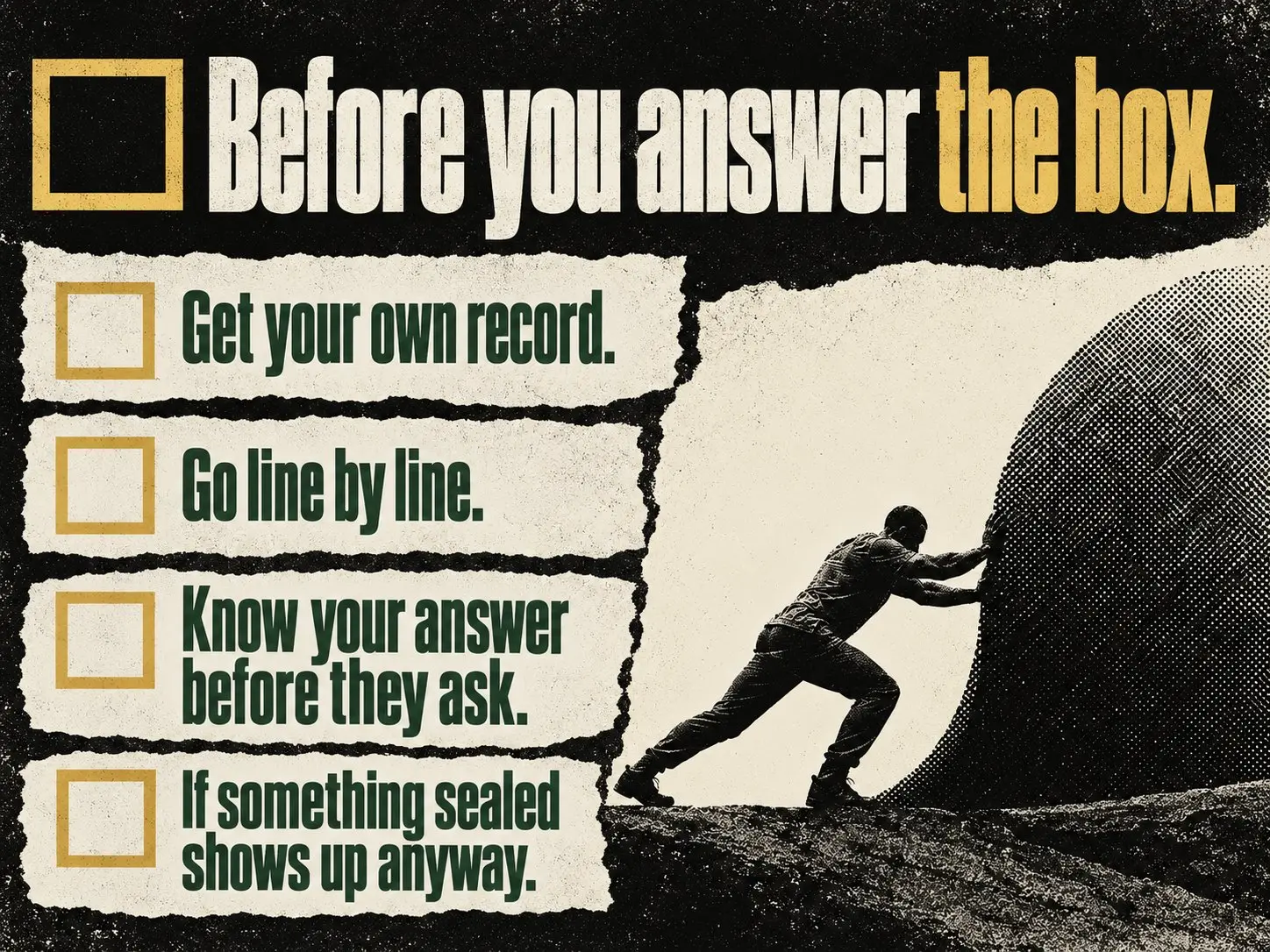
Go line by line.
For each line write down: what it was, when it happened, and whether you've had a conviction since. Don't guess at dates. If you don't know, write "find out."
| What it was | When | Conviction since? | Sealed? | Remove |
|---|
Know your answer before they ask.
If a record is sealed, most employers can't make you disclose it. If it isn't sealed, you're going to want a short, true answer you've said out loud before. Some jobs are exceptions no matter what (police work, jobs where the law requires the question).
Want to practice it? The Refinery has a Disclosure Planner and Interview Practice. It's a free account, and anything you built in the Forge is already there. Open the Refinery ↗
If something sealed shows up anyway.
Background check companies get things wrong. If an employer is going to turn you down because of a background check, they have to give you a copy of the report first. If something's on it that shouldn't be, dispute it with the company that ran it.
Before you answer the box.
This isn't legal advice and I'm not a lawyer. If you're not sure where you stand, the Virginia page on SMR lists free legal help.
If you know an employer that hires people with records, tell me who and how you know. I'll write to them.
Troy

Get the next one
Twice a week from Troy. What I'm building, what broke, what I learned, and one thing you can use. Free. Unsubscribe in one click.